
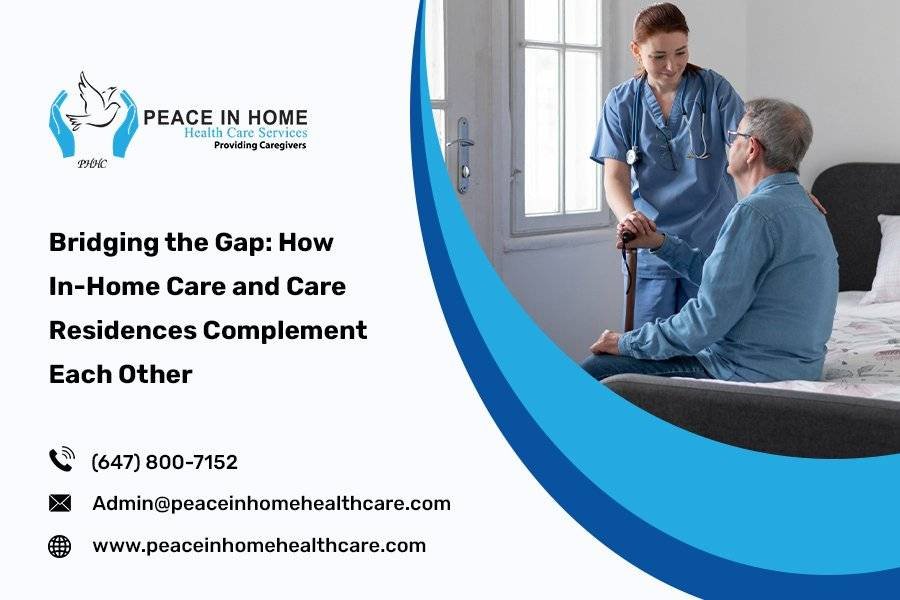
As our loved ones age, families must make one of the most difficult and emotional decisions: how to give care with dignity, comfort, and freedom. Many families think they must choose between in-home and residential care. Care plans that work frequently involve both.
At Peace in Home Health Care Services, we believe senior care should never be rigid. Care must alter as needs change as we age. Home care for seniors and care houses collaborate to provide balanced, supportive, and flexible care.
Understanding Aging Seniors’ Changing Needs
No two seniors age similarly. Some live independently for years, requiring occasional help. Some develop gradual physical restrictions, memory changes, or health conditions that require more support.
Most seniors want to feel protected, respected, and connected in familiar surroundings.
Seniors frequently start their care journey with Elderly in-home care for the elderly in Toronto. Their support does not disturb routines or emotional comfort. Care dwellings can be added as needed rather than replaced.
What Is In-Home Care and Why Does It Matter?
Home help for seniors entails professional caregivers supporting seniors at home. Quality of life and independence are the goals of this care.
Common In-Home Care Services:
- Bathing, grooming, and dressing
- Fall prevention and mobility help
- Support for meal prep and hydration
- Reminders for medications
- Laundry and light cleaning
- Transportation and appointment accompanying
Social and emotional support
Senior home help gives many families peace of mind. Seniors reduced fear, disorientation, and isolation by staying in familiar places with memories, habits, and familiarity.
Why Many Seniors Prefer Home Ageing
In addition to convenience, aging at home is emotional. Home means security, independence, and individuality.
Toronto elderly in-home care benefits include:
- Stress decreases in familiar surroundings.
- Personalised care
- Stronger caregiver-emotional relationships
- More daily routine control
- Better mental and emotional health
In-home care lets independent seniors receive vital support.
Understanding Care Residences: Their Role
Care apartments help elders who need structure, supervision, or specialized services. They may be assisted living, retirement, or long-term care homes.
Typical Care Home Services:
- Staff available 24/7
- Manage medications
- Meal scheduling and nutrition tracking
- Wellness activities and programs
- Socializing with peers
- Emergency response and safety features
Care apartments can provide stability and medical oversight for elders with advanced health or cognitive issues that families may struggle to manage.
Why In-Home Care and Care Residences Are Not Opposites
One of the biggest senior care myths is that choosing one choice means relinquishing the other. Carefully combining elder home care with care residences works best.
Care is a continuum, not a single decision.
Senior care needs may change in a year. Starting with elder home help, let’s families give needed assistance while monitoring needs. Care residences can be added progressively as needed.
This method replaces fear and uncertainty with strategy and assurance.
In-home care aids care home transitions.
Transitions are one of the hardest parts of aging care. Seniors may feel overwhelmed if they move into a care home suddenly.
Caregivers at home can help by:
- Preparing seniors emotionally for the change
- Helping organize paperwork and things
- Maintaining regularity and familiarity during transition
- Provide friendship throughout the adjustment.
Senior home care provides continuity of care, making transitions less abrupt and more supportive.
Combining Care: A Practical and Compassionate Approach
Many families chose a hybrid strategy with in-home and care residences at various phases.
- Early In-Home Care Support: Early-aging seniors may need only modest support. Home help for elders can fix minor difficulties before they become major ones.
- Temporary residence care with ongoing in-home support: Seniors may need short-term residence care after surgery, illness, or accident, followed by Toronto elderly in-home care.
- Daytime In-Home Care, Evening Residence Support: Some seniors like the social atmosphere of a residence but desire daytime care.
- Family Support and Caregiver Relief: Family caregivers often burn out. Family members can focus on emotional connection instead of constant caregiving with in-home caregivers.
The Emotional Benefits of Coordinated Care
Physical, emotional, and psychological care are provided.
- Regular, caring care for seniors:
- Anxiety falls
- Confidence rises
- Depression and loneliness decrease.
- Family members feel supported.
Home care for elders fosters lasting relationships, while care residences engage the community. Together, they stabilize emotions.
How Peace in Home Health Care Helps Seniors and Families
Peace in Home Health Care Services knows every family is different. Our goal is to guide families through care options with clarity and compassion.
Our in-home care services focus on:
- Independence, dignity, and respect
- Personal care plans
- Flexible scheduling
- Effective and caring caretakers
- Mental and social health
We happily serve families seeking flexible Toronto elderly in-home care.
Supporting Families Throughout Care
Senior care can be emotionally draining. Family members often feel guilty, hesitant, and afraid of making the incorrect choice.
We assist families:
- Giving honest advice
- Flexible care solutions
- Supporting necessary transitions
- Reducing caregiver stress
- Making seniors feel heard and respected
Families can spend precious time together without worrying about care logistics with the correct support.
Questions Families Should Ask When Planning Care
Before choosing care, families should consider:
- How much support is needed now?
- Can the senior live alone safely?
- Are regularity and familiarity important?
- Are there cognitive or physiological issues?
- How can care change?
Answering these questions helps families develop long-term strategies for senior home support and supplementary care.
Confident Future Planning
Though inevitable, aging does not have to be uncertain. Families may help loved ones age with dignity and tranquility with careful planning and assistance.
By combining senior home care with care residence help when needed, families establish a safety net that adapts without disturbances.
Conclusion: Adaptable, Supportive, Respectful Care
Senior care is not one-solution. Create an evolving care plan for your loved one.
Care homes and in-home care complement each other well. After appropriate mixing, they provide stability, comfort, safety, and emotional well-being.
Peace in Home Health Care Services encourages elders and families to live well.
Because effective care conserves independence.


