
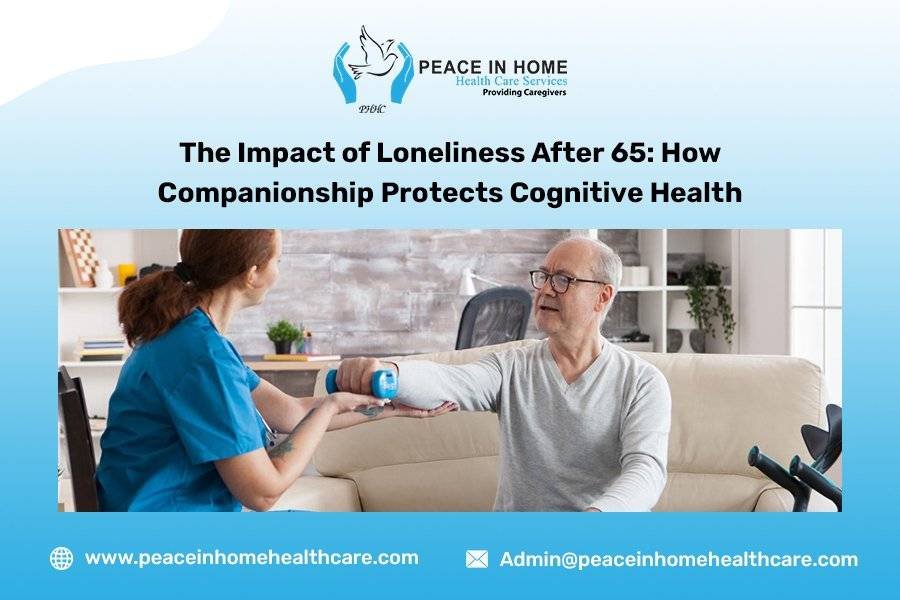
People say aging is quieter. Time slows, patterns alter, priorities shift. Change can bring peace and introspection, but also loneliness. Many seniors believe loneliness is an increasing mental, physical, and spiritual health issue.
Peace in Home Health Care Services serves seniors and families daily. Cognitive and emotional health require meaningful human interaction. This article explores loneliness beyond 65 and how companionship care for elderly adults plays a powerful role in protecting cognitive health.
Silence and loneliness grow beyond 65.
Senior loneliness is often disregarded. It is not always dramatic. Long silences, fewer conversations, or days alone can suggest it. Extended loneliness is emotionally draining.
After 65, life changes fast:
- Coworkers are less accessible after retirement.
- Children may be far or busy.
- Friend and spouse deaths are possible.
- Health concerns can limit socializing.
Even with loving relatives, these changes may isolate the elderly. Loneliness can fester.
Why Loneliness Exceeds Emotions
Many mistake loneliness for depression or boredom. This is a severe health risk. According to research and caregiver experience, prolonged loneliness can affect mental and physical health.
Elderly loneliness raises the odds of:
- Cognitive decline and memory loss
- Depression, anxiety
- Hypertension and heart disease
- Poor sleep
- Reduced immunity
One of the worst is cognitive decline. To function, the brain needs stimulation, curiosity, and emotion. Without them, mental sharpness may swiftly decline.
Our brains need social interaction.
Human brains are wired for connection. Conversation, storytelling, problem-solving, and emotion transfer stimulate brain areas. Cognitive resilience and neural circuits are maintained by activities.
Senior loneliness:
- They communicate less, reducing language stimulation.
- They decide less.
- They miss memory recall chances.
- They may shun mental challenges.
Decreased stimulation can accelerate cognitive decline. Simply said, brain health requires interaction.
The Link Between Dementia and Loneliness
While loneliness does not cause dementia, it certainly increases the risk. Chronically lonely seniors are more likely to suffer memory issues due to stress and inactivity.
Due to loneliness:
- High stress hormones affect neurons
- Lower mental and physical activity drives
- Poor sleep impairs memory.
- Focus is impaired by emotional anxiety.
Dementia prevention and cognitive care require loneliness reduction.
Cognitive and emotional wellness are linked.
Cognitive and emotional wellness are related. Seniors are more focused and motivated when emotionally supported. Losing someone can affect cognition due to emotional distress.
The emotional effects of loneliness include:
- Sadness or depression
- Worry about the future
- Feeling worthless
- Confidence lost
Thinking, memory, and confusion are affected by emotions. Social withdrawal can follow emotional withdrawal, creating a cycle that is hard to break.
Companionship Care at Home: Comfort Meets Connection
Elderly companionship prioritizes emotional support over medical care. Being present, listening, and having meaningful daily interactions are crucial.
Through home care assistance, Toronto families can ensure their loved ones receive not only practical support but also a genuine human connection—right where they feel most comfortable.
Companionship care may include:
- Friendly talk and emotional support
- Meal and ritual sharing
- Hobby, game, or light activity
- Walking or going out with seniors
- Promoting socialization
This care restores normalcy and belonging after loneliness erodes them.
Companions Protect Cognitive Health
- Conversation Boosts Brain: Conversation teaches language, logic, and memory. Discussing past or contemporary events stimulates the brain.
- Encourages Thinking: Puzzles, reading, and music stretch brain regions and keep minds sharp.
- Lowers Stress and Anxiety: Comfort from company decreases brain-damaging stress.
- Helps maintain routine: Elders with memory changes benefit from regular companionship.
- Improves Motivation and Confidence: Feeling valued and heard keeps seniors motivated and improves happiness and cognition.
The Power of Home Care
Warmth, familiarity, and identity come from home. Seniors benefit from home companionship. Seniors feel in control in familiar surroundings.
Toronto home care supports seniors’ independence and daily companionship. Home companionship helps seniors age with dignity and gives emotional support.
Seniors benefit from home companionship:
- Personal routines
- Relax and feel safe
- Engage emotionally and mentally
- Maintain independence with aid
Family Love Is Vital—But Not Always Enough
Family is crucial to seniors. Modern obligations may limit family time. Work, distance, and caregiving might hinder daily companionship.
Professional camaraderie counts. It keeps the elders company and provides emotional support. Family support is enhanced by companionship (not replaced).
Helping Vaughan and Toronto Seniors
Urban regions like Vaughan and Toronto have many amenities, yet seniors without transportation may feel isolated. Local support connects seniors.
Reliable senior care in Vaughan addresses physical, emotional, and cognitive needs. Companions help seniors socialize independently.
Seniors gain from the local company:
- Stay active in familiar areas
- Maintain cultural and social customs
- Connect with surroundings
- Age confidently and gracefully
Early loneliness detection
Often, loneliness grows slowly. Families should notice tiny signs like:
- Disengagement from negotiations
- Increased forgetfulness
- Appetite or sleep changes
- Not interested in hobbies
- Sadness often expressed
Early treatment can prevent cognitive and emotional impairment. If introduced at the right time, companionship can last.
Prevention via Companionship
Many believe care is only needed in crises. Proactively building camaraderie works best. Protects mental and emotional health.
Early friendship advantages:
- Cognitive decline slows
- Enhanced mental health
- Lower depression risk
- More life satisfaction
Early loneliness intervention safeguards family health.
Approach to Peaceful Home Health Care
Peace in Home Health Care Services believes outstanding care begins with understanding. We value empathy, respect, and genuine connection in companionship.
This is our focus:
- Personalized care that respects desires
- For emotional stability, constant company
- Promoting mental and emotional health
- Respecting and hearing the elderly
Our caregivers lend warmth, conversation, and reassurance to daily life.
Connection, Dignity, and Purpose in Aging
Not everyone is lonely beyond 65. Support keeps seniors mentally bright, emotionally fulfilled, and life-connected.
Aging companionship care, trustworthy home care Toronto families trust, and compassionate elder care Vaughan communities need make meaningful connections part of daily life.
Talking together. Remembered tale. A sense of presence.
Simple moments protect the mind and heart, and remind elders they are never alone.